

Why Reliability Matters in Sports Simulator Technology
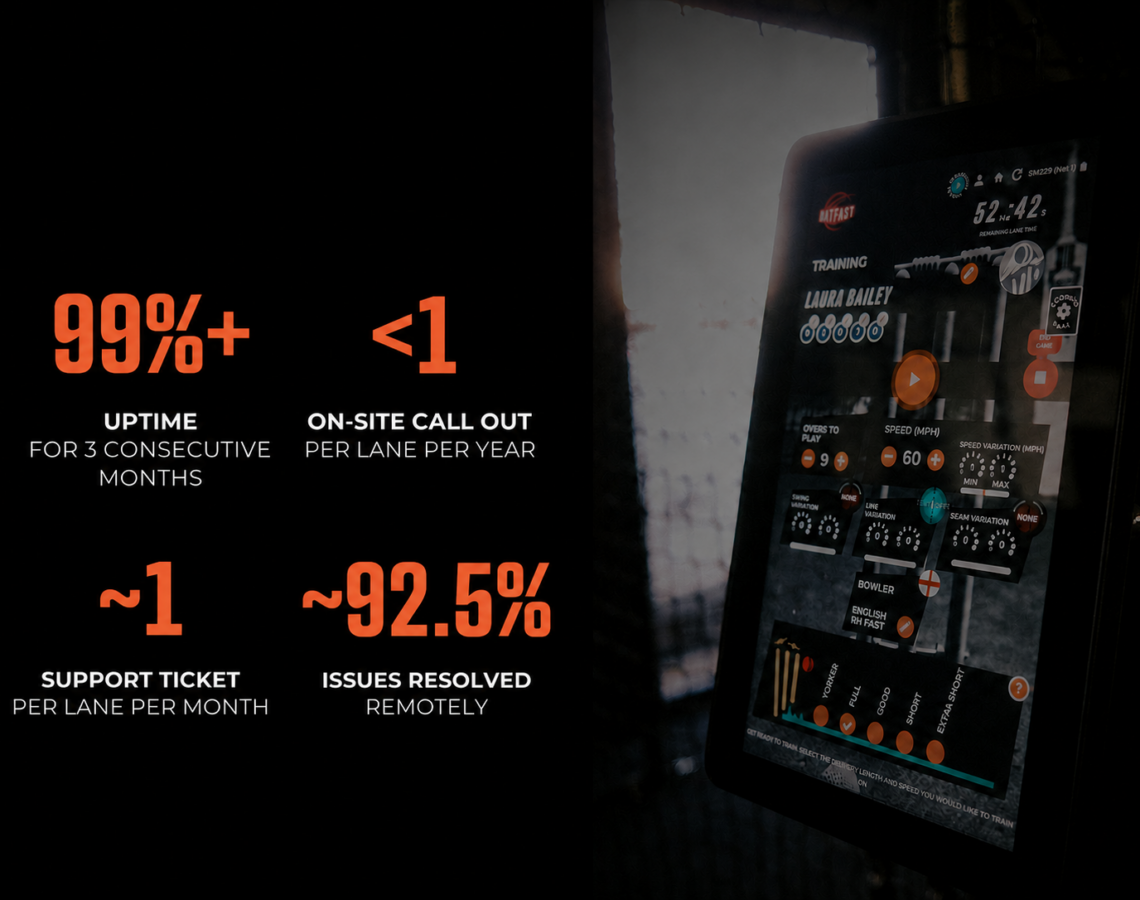
The sports and location-based entertainment industries are becoming increasingly dependent on connected technology. Machines deliver balls, cameras observe movement, software manages sessions, and digital platforms connect players, venues and operators. This creates significant opportunities to make sport more accessible, engaging and commercially scalable. It also creates a dependency that can be easy to underestimate: when technology becomes central to the customer experience, reliability becomes central to revenue.
Why Reliability Is Critical in Sports Simulator Technology
For venue operators, the impact of an interrupted system can extend well beyond the period of unavailability. A disrupted session may lead to rescheduling, refunds, customer frustration or additional pressure on staff. Over time, repeated operational uncertainty can also affect how confidently teams promote the experience, schedule larger events or consider further installations. The immediate concern may be a lost booking, but the wider commercial issue is trust.
Reliability should therefore not be viewed solely as a technical performance measure. It is an operating capability that influences customer satisfaction, staff confidence, repeat visitation, renewals and expansion. New features may generate attention, but dependable day-to-day performance is what enables operators to build a sustainable business around the technology.
Why Physical AI Creates a Different Reliability Challenge
This is particularly challenging in physical artificial intelligence. Unlike a conventional software product, a connected sports system combines mechanical, electrical, computational and environmental components. Ball feeders, motors, cameras, projectors, safety controls, computers, software and venue networks must work together under real operating conditions. When an issue occurs, the visible symptom may not reveal the underlying cause. A network problem may appear to be a frozen interface, while a camera or calibration issue may present as a scoring problem.
Building reliability across this type of system is rarely the result of a single breakthrough. It is an ongoing process of design, deployment, observation and improvement. Each installation creates opportunities to understand how the technology performs across different venues, operating environments and patterns of use. That learning can inform commissioning procedures, component selection, software resilience, maintenance processes, staff guidance and future product development.
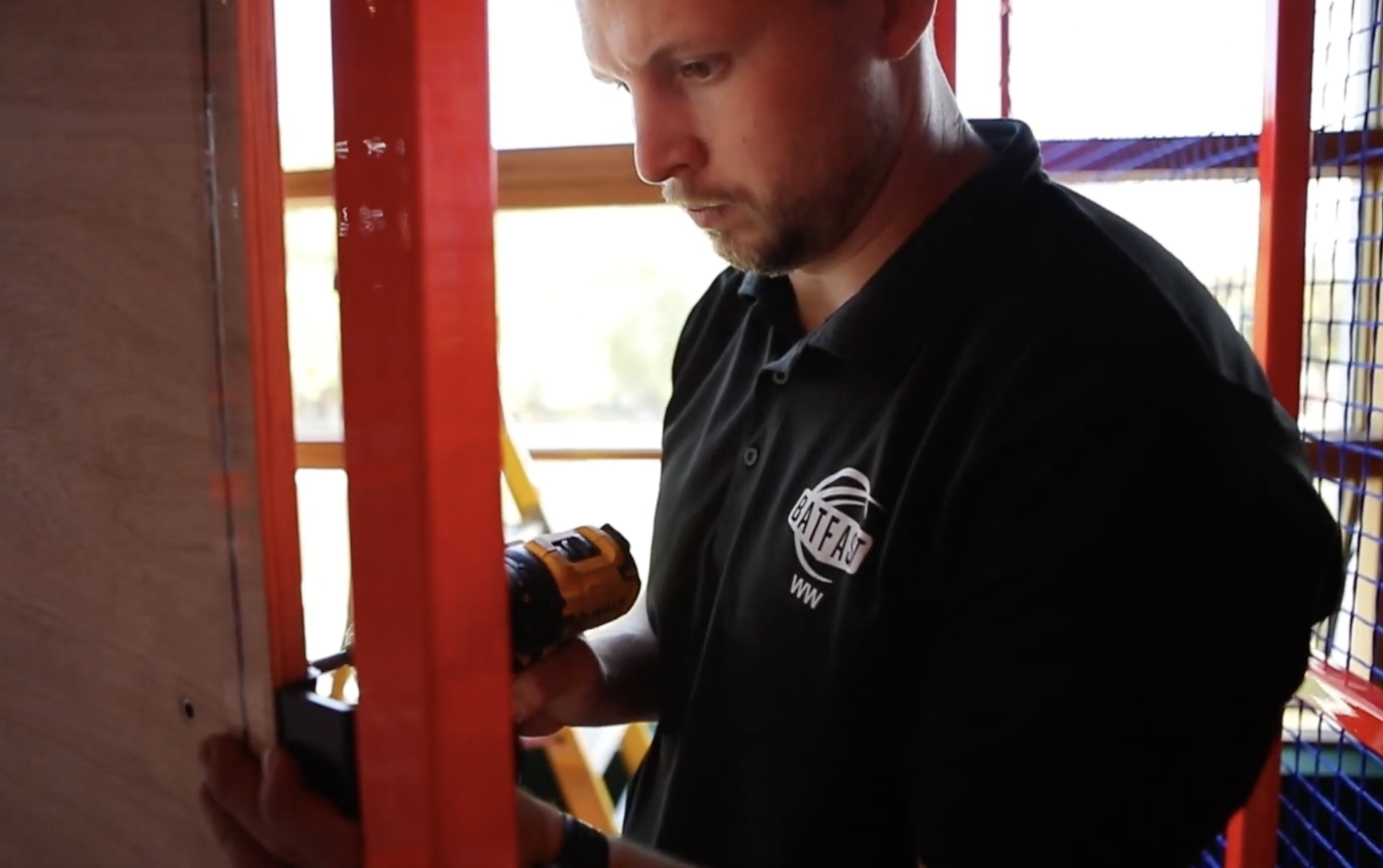
At BatFast, this has required sustained work across the business. Engineering, operations, product, support and venue teams have all contributed to improving how systems are installed, monitored, maintained and supported. As with most companies developing complex physical technology, the platform has matured through iteration. The objective is not to suggest that every challenge can be eliminated, but to ensure that issues can be identified earlier, understood more clearly and resolved more effectively.
How Remote Diagnostics Improve Support and Uptime at Scale
Remote diagnostics is an important part of that progress. Without sufficient diagnostic visibility, support teams often have to rely on descriptions from venue staff and a process of elimination. This can make it harder to distinguish between hardware, software, network, calibration, environmental or operating issues. As the number of installations grows, a support model based primarily on manual investigation becomes increasingly difficult to scale.
A stronger diagnostic capability allows support teams to review relevant system information remotely, including device status, network connectivity, software versions, machine behaviour, calibration history and error events. This provides better context before decisions are made about the appropriate response. Some issues may be addressed through a remote reset, configuration change, software update or guided action by venue staff. Where an engineer is required, better information can improve the likelihood that the right person arrives with the right parts and a clearer understanding of the issue.
The commercial value extends beyond faster resolution. Better diagnostics can reduce unnecessary site visits, improve first-time fix rates, lower the burden on venue staff and support more consistent decision-making. It also creates an estate-level learning loop. Patterns identified across multiple installations can inform future hardware improvements, software changes, training materials and preventative maintenance procedures. Each deployment therefore contributes not only to revenue, but also to the continuing maturity of the wider platform.
This capability becomes increasingly important as the industry moves towards unstaffed and semi-staffed sports environments. These facilities cannot depend on a trained technician being present beside every system. The technology must provide greater visibility, support routine recovery and escalate genuine technical or safety concerns appropriately. Remote diagnostics becomes part of the supervision layer that helps automation operate with greater confidence.
Building Sports Technology That Performs at Commercial Scale
For operators and investors, the implication is clear. Physical technology businesses that expand without strong systems for monitoring, diagnosis and continuous improvement risk increasing operational complexity with every installation. By contrast, businesses that learn systematically from their deployed estate are better positioned to improve uptime, manage support costs and earn long-term operator confidence
The next generation of sports technology will not be defined by innovation alone. It will be defined by whether advanced systems can perform dependably in real venues, under real conditions and at commercial scale.
Reliability is not a claim of perfection. It is the result of sustained effort, honest learning and the discipline to keep improving. In physical AI, that discipline is not separate from the product. It is part of what makes the product commercially valuable.
FAQs
Why is reliability important in sports simulator technology?
Sports Simulator reliability directly affects the customer experience and venue operations. Downtime can lead to interrupted sessions, refunds, additional staff pressure, and lost confidence in the technology.
What makes physical AI systems more complex than conventional software?
Physical AI combines software with real-world hardware such as cameras, ball machines, motors, projectors, computers and venue networks. All of these components must operate together reliably under changing physical conditions.
What are remote diagnostics in sports technology?
Remote diagnostics allow support teams to review system information such as device status, connectivity, software versions, calibration history and error events without immediately requiring an engineer on-site.
How can remote diagnostics benefit venue operators?
They can help identify issues faster, reduce unnecessary site visits, support more effective troubleshooting and give engineers better information when an on-site intervention is required.
Why is reliability especially important for unstaffed sports venues?
Unstaffed and semi-staffed venues cannot rely on a technician being beside every system. Connected monitoring and remote support therefore become important parts of maintaining dependable day-to-day operation.

Leave a Reply
You must be logged in to post a comment.